

US citizens need a visa to enter Vietnam – there is no visa exemption for American passport holders. The most popular option is the Vietnam e-Visa, which costs $25 USD for single entry or $50 USD for multiple entry and allows stays of up to 90 days. This guide covers every visa option, the step-by-step application process, fees, and entry requirements for US travelers heading to Vietnam in 2026.
Do US Citizens Need a Visa for Vietnam?
Yes. US citizens must obtain a visa before entering Vietnam. The United States is not on Vietnam’s visa exemption list, which currently covers 25+ countries including the United Kingdom, Germany, France, Japan, and South Korea. American passport holders cannot enter Vietnam visa-free, even for short tourism stays.
The previously available 1-year tourist visa for US citizens has been suspended by the Vietnamese government and is not currently offered. The maximum stay available through the e-Visa system is 90 days.
US citizens have three main options for obtaining a Vietnam visa:
- e-Visa – apply entirely online, 90 days maximum stay
- Visa on Arrival (VOA) – pre-approval letter required, collect at airport
- Embassy visa – apply through the Vietnamese Embassy or Consulate in the US
For most American travelers, the e-Visa is the fastest and most convenient option. It is available to citizens of all nationalities and can be processed in approximately 3 business days.
Vietnam e-Visa for US Citizens
The Vietnam e-Visa is the recommended visa option for US citizens traveling for tourism or business. It costs $25 USD for a single-entry visa or $50 USD for a multiple-entry visa, and allows a stay of up to 90 days. The e-Visa became available to all nationalities on August 15, 2023.
e-Visa Features
| Feature | Single Entry e-Visa | Multiple Entry e-Visa |
|---|---|---|
| Fee | $25 USD | $50 USD |
| Maximum stay | 90 days | 90 days |
| Entry type | One entry | Unlimited within validity |
| Processing time | 3 business days | 3 business days |
| Apply online | Yes | Yes |
The e-Visa is valid at 83 approved entry points, including international airports, land border crossings with China, Laos, and Cambodia, and seaports. Since 2026, the port-of-entry restriction has been removed, meaning you can enter and exit through any approved checkpoint regardless of which one you selected during application.
How to Apply for a Vietnam e-Visa (Step by Step)
Step 1: Visit the official e-Visa portal
Go to evisa.xuatnhapcanh.gov.vn (also accessible at evisa.gov.vn or thithucdientu.gov.vn). Click “E-visa Issuance” to begin.
Step 2: Enter your personal information
Fill in your full name exactly as it appears on your passport, nationality (United States), passport number, date of birth, email address, and intended entry and exit dates.
Step 3: Upload required documents
- Passport data page scan (clear, color, full page)
- Passport-style photo (4×6 cm, white background, no glasses, taken within 6 months)
Step 4: Select entry and exit points
Choose your intended port of entry and exit from the list of designated checkpoints. You can enter and exit through different approved ports if you select multiple entry.
Step 5: Pay the e-Visa fee
Pay online by credit or debit card. The fee is $25 USD for single entry or $50 USD for multiple entry. The fee is non-refundable, even if your application is denied.
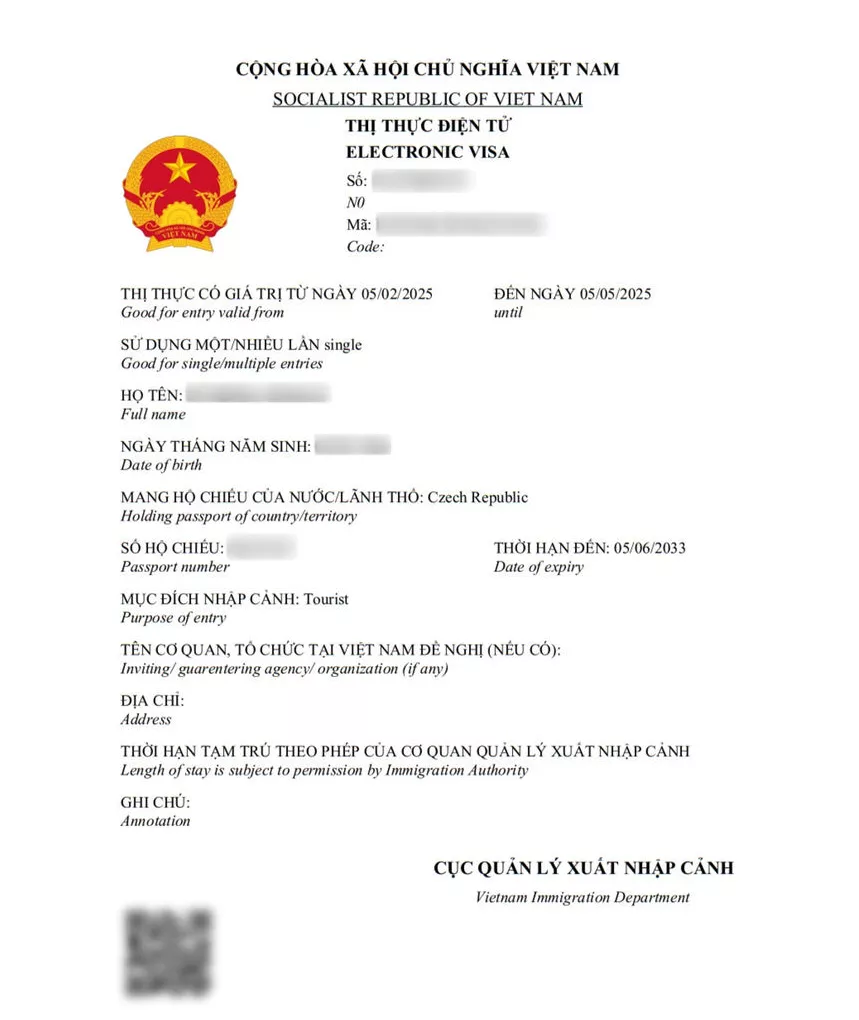
Step 6: Receive and print your e-Visa
Processing takes approximately 3 business days (see our Vietnam visa processing time guide for details) (government range: 3-10 business days). You will receive a confirmation email with your e-Visa in PDF format. You can also check your e-Visa status online. Print the e-Visa and carry it with your passport when traveling.
Important e-Visa Rules for US Citizens
- The e-Visa is not extendable while you are in Vietnam. To stay longer, you must leave the country and apply for a new e-Visa.
- You must enter Vietnam through the port of entry listed on your e-Visa (unless you selected multiple entry).
- The 90-day validity period starts from the date you specified as your entry date in the application.
- If your plans change after receiving the e-Visa, you may need to apply for a new one.
Vietnam Visa on Arrival for US Citizens
Vietnam Visa on Arrival (VOA) is available to US citizens, but only at international airports. Unlike the e-Visa, VOA requires you to first obtain a pre-approval letter through the Vietnamese Immigration Department or a licensed travel agency in Vietnam before your trip.
How VOA Works
- Apply for an approval letter online through a licensed travel agency (2-4 working days processing)
- Receive the approval letter by email and print it
- Fly to a Vietnamese international airport (Hanoi, Ho Chi Minh City, Da Nang, Nha Trang, or Phu Quoc)
- Go to the VOA counter at the airport upon arrival
- Submit your documents: passport, approval letter, passport photo, completed entry/exit form
- Pay the stamping fee in cash (USD): $25 single entry or $50 multiple entry
- Receive your visa stamp and proceed through immigration
VOA Costs and Processing
| Item | Cost | Notes |
|---|---|---|
| Approval letter | $6-$25 USD | Agency service fee varies |
| Stamping fee | $25 single / $50 multiple | Cash USD at airport |
| Express processing | $30-$50 extra | Same-day approval letter |
| Stay duration | 30 or 90 days | Depends on letter type |
VOA Limitations
- Airports only – VOA is not available at land border crossings or seaports
- Pre-approval required – you cannot simply arrive at the airport and get a visa
- Cash payment – stamping fee must be paid in US dollars at the airport counter
- Wait time at airport – VOA processing at the airport can take 15-30 minutes or longer during peak hours
For most US travelers, the e-Visa is a better option than VOA because it is cheaper, simpler, and does not require a third-party agent.
Vietnam Embassy Visa for US Citizens
US citizens can apply for a Vietnam visa at the Vietnamese Embassy in Washington DC or at Vietnamese Consulates in Houston, San Francisco, and New York. An embassy visa is required for stays longer than 90 days or for specific visa types such as work, study, or investment.
Vietnamese Embassy and Consulates in the US
| Location | Address | Services |
|---|---|---|
| Embassy | 1233 20th St NW, Suite 400, Washington DC 20036 | All visa types |
| Consulate General | Houston, TX | Tourist, business visas |
| Consulate General | San Francisco, CA | Tourist, business visas |
| Consulate General | New York, NY | Tourist, business visas |
Embassy Visa Fees and Processing
| Visa Type | Fee | Standard Processing | Express Processing |
|---|---|---|---|
| 30-day single entry | $70 USD | 5-7 business days | 2-3 business days |
| 90-day single entry | $100 USD | 5-7 business days | 2-3 business days |
| 90-day multiple entry | $130 USD | 5-7 business days | 2-3 business days |
Express processing typically costs an additional $100-$150 USD on top of the base fee. Same-day processing may be available for an additional $200-$250 USD, depending on the consulate.
When to Choose an Embassy Visa
- You need to stay longer than 90 days in Vietnam
- You are applying for a work visa (LD), student visa (DH), or investment visa (DT)
- You prefer to have your visa stamped in your passport before traveling
- You have had an e-Visa application denied and want to discuss alternatives
Phu Quoc Island: Visa-Free for US Citizens
US citizens can visit Phu Quoc Island without a visa for up to 30 days. This special exemption applies to all foreign nationals who fly directly into Phu Quoc International Airport from outside Vietnam.
Conditions for the Phu Quoc visa exemption:
- Direct international arrival – you must fly directly to Phu Quoc from abroad (not via Ho Chi Minh City or Hanoi)
- Stay within Phu Quoc – the exemption only covers the island; visiting mainland Vietnam requires a visa
- 30-day maximum – you cannot extend beyond 30 days under this exemption
- Passport valid for 6 months from your arrival date
If you plan to visit both Phu Quoc and mainland Vietnam, you need a regular visa (e-Visa, VOA, or embassy visa). The Phu Quoc exemption does not apply if you transit through a Vietnamese mainland airport.
Passport Requirements for US Citizens
Your US passport must meet these requirements to enter Vietnam:
- Validity: At least 6 months beyond your intended date of arrival in Vietnam
- Blank pages: At least 2 blank pages for entry and exit stamps
- Condition: No significant damage – Vietnamese immigration officers have denied entry to travelers with damaged passports
- Same passport: You must enter and exit Vietnam using the same passport. Dual nationals should be aware of this rule.
If your passport does not meet these requirements, you will be denied boarding by your airline or refused entry at the Vietnamese border.
Digital Arrival Card (New in 2026)
As of April 15, 2026, foreign nationals entering Vietnam via Tan Son Nhat Airport (SGN) in Ho Chi Minh City are encouraged to complete a digital arrival card online before arrival. This system is not yet mandatory but may become required with little notice. It is expected to expand to other Vietnamese airports in the future.
Vietnam Visa Options Comparison for US Citizens
| Option | Cost | Stay Duration | Processing Time | Best For |
|---|---|---|---|---|
| e-Visa | $25-$50 USD | Up to 90 days | 3 business days | Most travelers |
| Visa on Arrival | $31-$75+ USD | 30 or 90 days | 2-4 days + airport wait | Last-minute travelers |
| Embassy visa | $70-$130 USD | 30-90 days | 5-7 business days | Long stays, work, study |
| Phu Quoc exemption | Free | 30 days | N/A | Island-only trips |
For a detailed comparison of all visa categories, see our guide to Vietnam visa types.
How Much Does a Vietnam Visa Cost for US Citizens?
The total cost depends on how you apply and which visa type you choose. Here is a breakdown of all fees:
e-Visa Fees (Paid Online)
- Single entry: $25 USD
- Multiple entry: $50 USD
- Additional costs: None (no service fees on the official portal)
Visa on Arrival Fees
- Agency service fee: $6-$25 USD (for the approval letter)
- Stamping fee at airport: $25 USD (single) or $50 USD (multiple), payable in cash USD
- Express approval letter: $30-$50 USD extra
- Total range: $31-$125 USD depending on processing speed and entry type
Embassy Visa Fees
- 30-day single entry: $70 USD
- 90-day single entry: $100 USD
- 90-day multiple entry: $130 USD
- Express surcharge: $100-$150 USD
- Same-day surcharge: $200-$250 USD
For a complete fee schedule, visit our Vietnam visa fees page.
Common Reasons for Vietnam Visa Denial for US Citizens
While Vietnam has a high visa approval rate, applications can be denied for several reasons. Understanding these can help you avoid delays and rejections.
- Low-quality photo or scan – blurry passport scans or photos with glasses, shadows, or colored backgrounds are the top reason for e-Visa rejection
- Passport number errors – typos in the passport number during online application
- Passport validity less than 6 months – your passport must have at least 6 months remaining at your intended entry date
- Incorrect personal information – name spelling must match your passport exactly
- Previous overstay – if you have overstayed a previous Vietnam visa, your new application may be flagged
- Criminal record – certain criminal convictions may result in visa denial
To avoid denial, double-check all information before submitting your e-Visa application and ensure your passport photo meets the specifications: 4×6 cm, white background, no glasses, taken within 6 months.
Tips for US Citizens Traveling to Vietnam
- Apply for the e-Visa at least 2 weeks before departure – while processing takes 3 business days, delays can occur during holidays or peak travel seasons
- Print your e-Visa – carry a physical copy along with having it on your phone
- Carry US dollar cash – you need USD for VOA stamping fees, and some services in Vietnam still prefer cash
- Check Tet holiday dates – the Vietnamese Lunar New Year (Tet) causes a 7-9 day government closure, which delays all visa processing
- Declare cash over $5,000 USD – amounts exceeding $5,000 USD or 15,000,000 VND must be declared at customs
- Do not overstay – overstaying your visa results in fines, detention, and possible deportation, and can affect future visa applications
- Enroll in STEP – the US Smart Traveler Enrollment Program (STEP) at step.state.gov provides safety updates and helps the US Embassy contact you in emergencies
FAQs About Vietnam Visa for US Citizens
Do US citizens need a visa to visit Vietnam?
Yes. US citizens must obtain a visa before entering Vietnam. The United States is not on Vietnam’s visa exemption list. American travelers can apply for an e-Visa online ($25-$50 USD), get a Visa on Arrival at Vietnamese airports (requires pre-approval letter), or apply at a Vietnamese Embassy or Consulate in the US.
How long can US citizens stay in Vietnam without a visa?
US citizens cannot stay in Vietnam without a visa. The only exception is Phu Quoc Island, where US citizens can stay for up to 30 days without a visa if they fly directly to Phu Quoc from abroad and do not visit mainland Vietnam.
How much does a Vietnam visa cost for US citizens?
The e-Visa costs $25 USD (single entry) or $50 USD (multiple entry). Visa on Arrival costs $31-$75+ USD including the approval letter and stamping fee. Embassy visas cost $70-$130 USD depending on duration and entry type, with express processing adding $100-$250 USD.
How long does it take to get a Vietnam e-Visa?
The Vietnam e-Visa typically takes 3 business days to process. The government processing range is 3-10 business days. Apply at least 2 weeks before your trip to account for potential delays during holidays or peak seasons.
Can US citizens get a Vietnam visa on arrival?
Yes, US citizens can get a Visa on Arrival at Vietnamese international airports, but you must first obtain a pre-approval letter through a licensed travel agency. You cannot simply arrive at the airport without prior arrangement. VOA is only available at airports, not at land or sea border crossings.
Is there a 1-year Vietnam visa for US citizens?
No. The 1-year tourist visa for US citizens has been suspended by the Vietnamese government and is currently not available. The longest stay available through the e-Visa system is 90 days. For longer stays, you need to apply for an embassy visa or leave and re-enter with a new e-Visa.
Can I extend my Vietnam visa while in the country?
No. The Vietnam e-Visa is not extendable while you are in Vietnam. To stay longer than your visa allows, you must leave the country and apply for a new e-Visa. Overstaying your visa results in fines and can affect future visa applications.
What documents do I need for a Vietnam visa?
For an e-Visa, you need: a valid US passport with at least 6 months validity and 2 blank pages, a digital passport photo (4×6 cm, white background, no glasses), a scanned copy of your passport data page, a working email address, and a credit or debit card for payment.
Where can I apply for a Vietnam visa as a US citizen?
Apply for an e-Visa at the official portal: evisa.xuatnhapcanh.gov.vn (also evisa.gov.vn or thithucdientu.gov.vn). For embassy visas, contact the Vietnamese Embassy in Washington DC or Consulates in Houston, San Francisco, or New York. For VOA, use a licensed travel agency to obtain a pre-approval letter.
Can US green card holders get a Vietnam visa?
US green card holders who are not US citizens need to check visa requirements based on their actual nationality, not their US residency. Some nationalities may have different visa requirements or exemptions. Apply for a Vietnam visa using the passport of your country of citizenship.
Is it safe to use third-party visa services for Vietnam?
The official Vietnam e-Visa portal charges only $25-$50 USD with no additional service fees. Third-party websites may charge $50-$200+ USD in service fees. Always apply through official government domains (evisa.xuatnhapcanh.gov.vn, evisa.gov.vn, or thithucdientu.gov.vn) to avoid overpaying or sharing personal data unnecessarily.