Vietnam Visa Fees in 2026: Complete Cost Breakdown
Planning a trip to Vietnam and wondering how much your visa will cost? The answer depends on which type of visa you choose, your nationality, and how you apply. This guide breaks down every fee you might encounter — from the official government e-visa fee to visa-on-arrival stamping charges, agency service costs, and free visa exemptions.
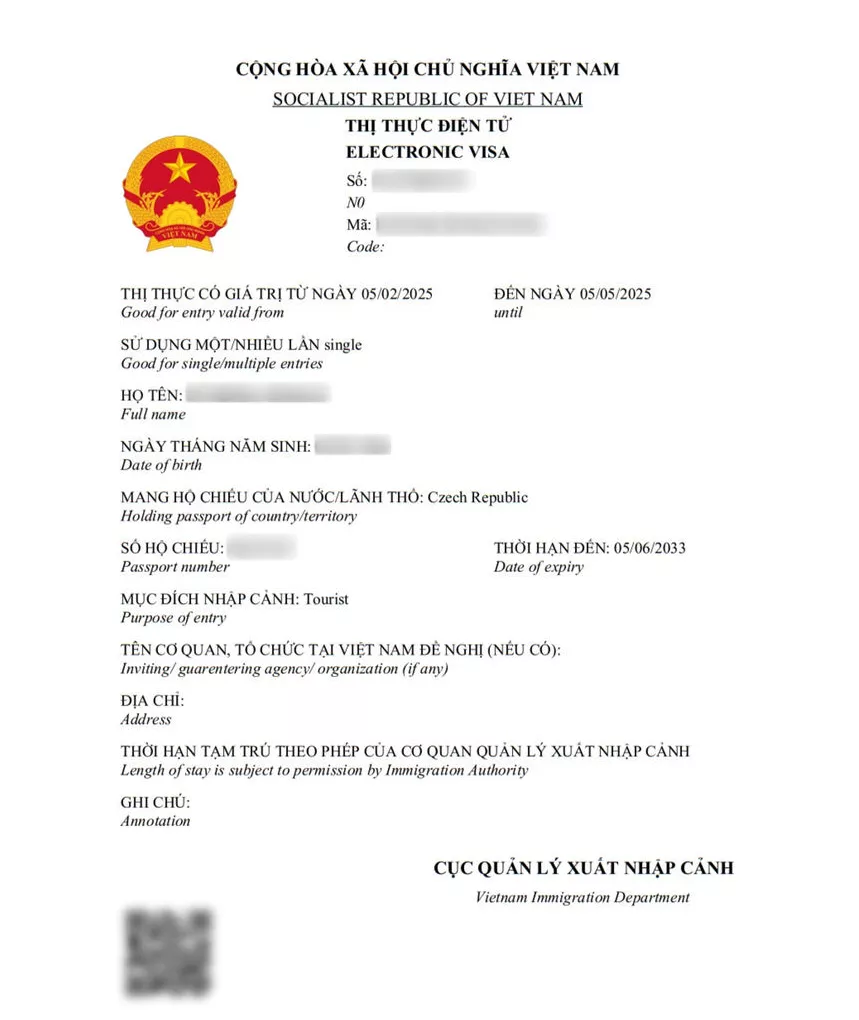
The bottom line: The official Vietnam e-visa costs just $25 USD for single entry or $50 USD for multiple entry when you apply directly through the government portal at evisa.gov.vn. Citizens of 25+ countries can enter Vietnam completely free under visa exemption agreements. Read on for the full picture.
Official Vietnam E-Visa Government Fees
The Vietnam electronic visa (e-Visa) is the most popular and convenient way to obtain a visa. Since August 15, 2023, the e-Visa program has been open to citizens of all countries and territories worldwide. The government fees are set by Vietnam’s Ministry of Finance and are non-refundable, even if your application is denied.
| Visa Type | Duration | Government Fee (USD) |
|---|---|---|
| Single entry | Up to 90 days | $25 |
| Multiple entry | Up to 90 days | $50 |
These fees are paid online by credit or debit card during the application process on the official portal. There is no additional stamping fee or airport charge when you arrive with an e-Visa — the $25 or $50 is all you pay.
Key Details About E-Visa Fees
- Non-refundable: If your application is rejected, the government fee will not be returned.
- Processing time: Standard processing takes 3–5 working days, though it may extend during peak seasons or public holidays.
- Payment methods: International credit cards and debit cards are accepted. Some applicants report issues with certain bank cards — Visa and Mastercard have the highest success rate.
- Same fee for all nationalities: The government e-visa fee does not vary by country of citizenship.
- No group applications: Each traveler must submit an individual application and pay the fee separately.
Visa Exemption: Enter Vietnam for Free
Citizens of more than 25 countries can enter Vietnam without a visa and at no cost under bilateral visa exemption agreements. The allowed stay duration depends on your nationality:
| Stay Duration | Eligible Countries |
|---|---|
| 90 days | Chile, Panama |
| 45 days | United Kingdom, Germany, France, Italy, Spain, Sweden, Norway, Denmark, Finland, Belgium, Netherlands, Austria, Poland, Czech Republic, Switzerland, Belarus, Japan, South Korea, Russia, and other European nations |
| 30 days | Cambodia, Laos, Malaysia, Thailand, Singapore, Indonesia, Philippines, Myanmar, Kazakhstan, Kyrgyzstan, Mongolia |
| 21 days | Brunei, Myanmar |
| 14 days | Some ASEAN member states |
Important: If you are from a visa-exempt country but plan to stay longer than the allowed period, you will need to apply for an e-Visa or another visa type before your exemption period expires. Overstaying even by one day can result in fines and a negative immigration record.
Additionally, all visitors arriving at Tan Son Nhat International Airport (Ho Chi Minh City) are encouraged to complete a Digital Arrival Card online before arrival. This system, introduced in April 2026, is free of charge and currently encouraged but not mandatory.
Vietnam Visa on Arrival: Fees and Stamping Charges
Visa on Arrival (VOA) is available only at Vietnam’s international airports. It requires a pre-arranged approval letter from a licensed travel agency before you fly. The total cost has two components:
1. Approval Letter Fee (Paid Online)
This is the service fee paid to the agency that arranges your visa approval letter from the Vietnam Immigration Department. Costs vary by agency, processing speed, and visa type:
| Processing Speed | Single Entry (30–90 days) | Multiple Entry (30–90 days) |
|---|---|---|
| Standard (5–7 working days) | $30–$55 | $55–$80 |
| Express (3–4 working days) | $55–$80 | $80–$110 |
| Urgent (1–2 working days) | $70–$100 | $100–$130 |
| Emergency (same day/4 hours) | $135–$160 | $170–$185 |
2. Stamping Fee (Paid in Cash at Airport)
When you land in Vietnam, you must pay a stamping fee in cash at the immigration counter to get the actual visa stamp in your passport:
| Visa Type | Stamping Fee (USD) |
|---|---|
| Single entry (up to 90 days) | $25 |
| Multiple entry (up to 90 days) | $50 |
Cash only: Credit cards are not accepted for the stamping fee. USD is strongly recommended to avoid unfavorable exchange rates. Prepare the exact amount — change is often not available at the counter.
Embassy or Consulate Visa Fees
If you prefer to obtain your visa before traveling, you can apply at a Vietnamese embassy or consulate in your home country. Embassy visa fees vary by country, visa type, and the specific embassy. Typical costs range from $50 to $100 USD for a standard tourist visa, with additional service charges depending on the embassy.
Processing times at embassies are generally longer (5–10 working days) and require you to submit your passport in person or by mail. You may also need to provide supporting documents such as flight confirmations, hotel bookings, and proof of sufficient funds. For most travelers, the e-Visa is a faster and more cost-effective option.
Agency Service Fees: What You Pay for Convenience
Many travelers use visa agencies to simplify the application process. Agencies handle form verification, document review, error correction, and expedited processing. Here is what you can expect to pay through popular services:
| Agency / Service | Starting Price | What’s Included |
|---|---|---|
| Direct government application | $25 | DIY on evisa.gov.vn, no support |
| Standard agency service | $55–$80 | Form review, submission, email support |
| Express agency service | $85–$135 | Faster processing (1–3 days) |
| VIP / Emergency service | $135–$185 | Same-day or 4-hour processing |
| Premium concierge | $89–$150 | Full application management, error detection, 24/7 support |
Agency fees are typically advertised as “all-inclusive” prices that bundle both the government fee and their service charge. The main value agencies provide is reducing the risk of application errors, which can lead to delays or rejections.
Hidden and Additional Costs to Budget For
Beyond the visa fee itself, there are several smaller costs that travelers often overlook:
- Passport photos: You need a digital portrait photo (4×6 cm, white background, JPG format, under 2MB) for the e-Visa application. If you don’t have one ready, expect to pay $5–$15 at a photo shop or use a free smartphone app.
- Passport validity: Your passport must be valid for at least 6 months beyond your arrival date and have at least 2 blank pages. If you need to renew your passport, that is an additional cost (typically $110–$200 depending on your country).
- Printing your e-Visa: You should carry at least one printed copy of your approved e-Visa PDF. Printing costs are minimal but essential — immigration officers and airlines will check it before boarding and upon arrival.
- Airport fast track service: Some agencies offer a VIP fast-track service at Vietnamese airports to skip the immigration queue. This typically costs $25–$45 per person and is completely optional.
- Visa extension: If you want to stay longer than your visa allows, extension fees inside Vietnam start at approximately $30–$60 depending on the type and duration. Note that e-Visas currently cannot be extended — you would need to do a “visa run” to a neighboring country and reapply.
Total Cost Comparison: E-Visa vs Visa on Arrival vs Exemption
| Method | Government Fee | Service Fee | Airport Fee | Total Cost |
|---|---|---|---|---|
| Visa exemption | $0 | $0 | $0 | FREE |
| E-Visa (direct) | $25 | $0 | $0 | $25 |
| E-Visa (via agency) | $25 (included) | $30–$135 | $0 | $55–$160 |
| Visa on Arrival | $0 (pre-paid) | $30–$160 | $25 | $55–$185 |
| Embassy visa | $50–$100 | $0–$50 | $0 | $50–$150 |
The cheapest option is always to check if your nationality qualifies for visa exemption. If not, applying directly for an e-Visa at $25 through the government portal is the most affordable route. Using an agency adds convenience but increases the total cost by $30 or more.
Frequently Asked Questions About Vietnam Visa Fees
Is the Vietnam e-Visa fee refundable if my application is denied?
No. The $25 or $50 government fee is non-refundable regardless of the outcome. This is why it is important to ensure your application is complete and accurate before submitting. Double-check your passport details, photo requirements, and entry port selection.
Can I pay the visa fee in Vietnamese dong?
The e-Visa fee is always charged in USD through the online payment system. The visa-on-arrival stamping fee can technically be paid in Vietnamese dong, but USD is strongly recommended to avoid unfavorable exchange rates at the airport counter.
Do children need to pay the same visa fee?
Yes. Each applicant, including children and infants, needs their own e-Visa and must pay the full government fee. Children under 14 who share a parent’s passport may be included on the parent’s e-Visa application at no extra charge.
Why do agencies charge more than the government fee?
Agencies provide additional services including application review, error correction, document formatting, priority processing, and customer support. They also handle communication with the Immigration Department on your behalf. The markup covers these services and the agency’s operational costs.
Has the Vietnam visa fee changed recently?
The e-Visa government fee has remained at $25 (single) and $50 (multiple) since the program expanded to all nationalities in August 2023. The e-Visa duration was also extended from 30 to 90 days at that time, with both single and multiple entry options introduced. Always check the official portal for the most current pricing.
Is there a fee for the Vietnam Digital Arrival Card?
No. The Digital Arrival Card, introduced in April 2026 at Tan Son Nhat Airport (Ho Chi Minh City), is completely free to complete online. It is currently encouraged but not mandatory for all foreign nationals arriving at that airport, though this requirement may change or expand to other airports with limited notice.
What is the cheapest way to get a Vietnam visa?
The cheapest way is to check if your country qualifies for visa exemption (free entry for 14–90 days). If you need a visa, apply directly on the government portal at evisa.gov.vn for $25 USD. Avoid unnecessary agency fees if you are comfortable completing the application yourself.
How to Apply for Your Vietnam E-Visa
Ready to get your visa? The fastest and most affordable way is to apply directly through our service. We simplify the application process, review your documents for errors, and ensure your e-Visa arrives on time.
Apply for your Vietnam e-Visa online →
For more details on processing times, see our guide on Vietnam visa processing time.